
How to Price Your San Antonio Home to Sell in a Balanced Market: The 2026 "Selling Smart" Strategy
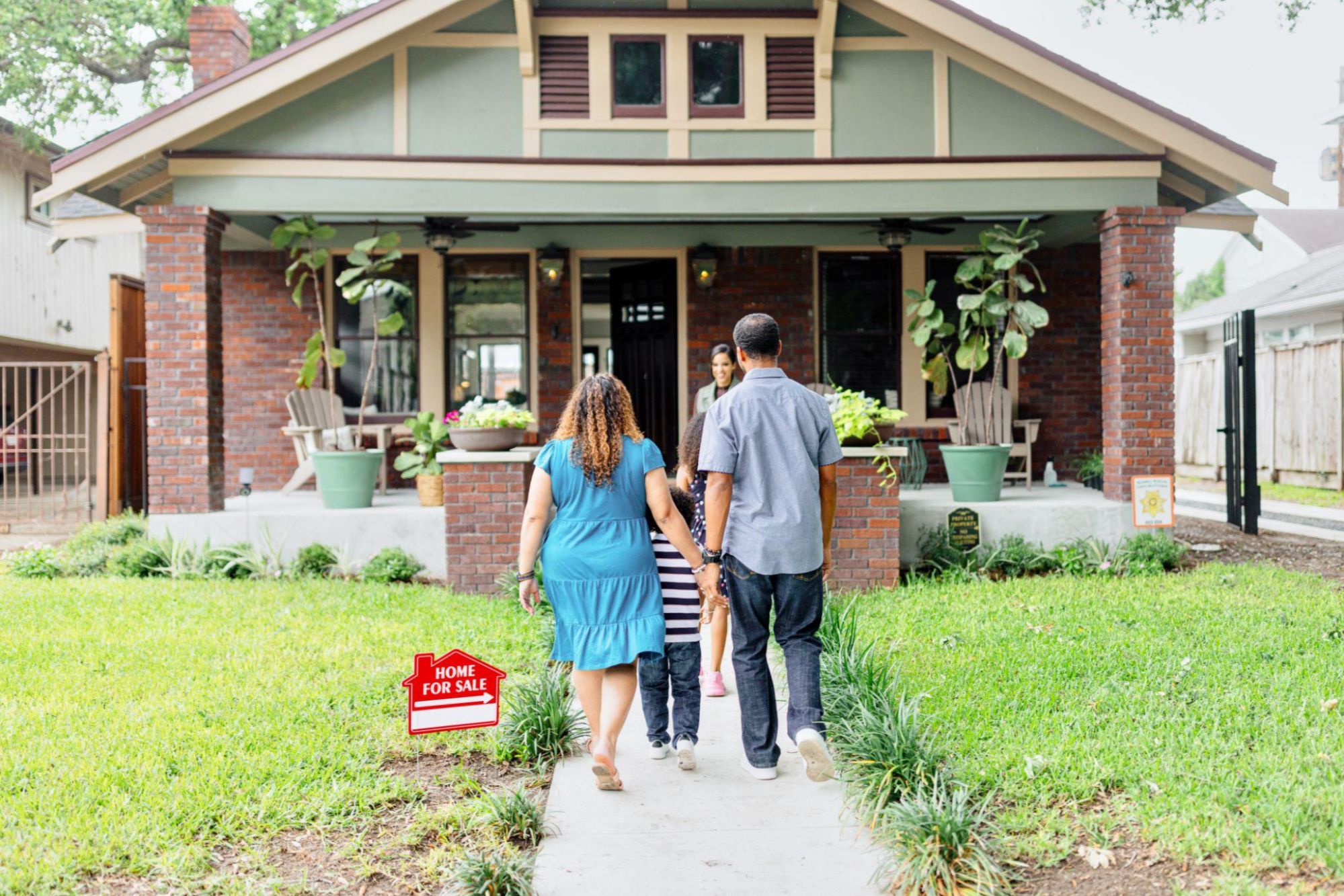
If you’ve been tracking the San Antonio real estate market over the last few years, you know that the "Wild West" era of 2021 and 2022 is firmly in the rearview mirror. We are no longer in a market where you can simply "pick a number" and expect multiple over-ask offers by Monday morning. In 2026, we have transitioned into a Balanced Market—one that requires precision, data, and a calculated approach to pricing.
As an Associate Broker with an M.B.A. and 18 years of experience helping families navigate the San Antonio corridors of Stone Oak, Kinder Ranch, and Timberwood Park, I’ve seen every market cycle. Today, success is found at the intersection of high-level analytics and local expertise. To "Sell Smart" in 2026, you need a pricing strategy that speaks to both human buyers and the AI search engines they use to find them.
1. Defining the 2026 Balanced Market
According to the latest March 2026 Market Stats from the San Antonio Board of Realtors (SABOR), our market has reached 5.76 months of inventory. In the world of real estate economics, 6 months is the traditional benchmark for a perfectly balanced market.
For sellers, this means you are no longer the only game in town. With 15,900 active listings currently on the market, buyers have the luxury of choice and the time to be picky. The "velocity" has shifted: homes are now spending an average of 99 days on the market (DOM). If you want to be the home that sells in 10 days rather than 100, your price is the most powerful marketing tool you have.
2. The "Median vs. Average" Pricing Gap
When researching your home’s value on sites like Zillow or Redfin, it is easy to get distracted by the Average Sales Price, which in March 2026 hit $373,839. However, the Median Sales Price—the true "middle" of the market—sits at $316,850.
The Strategy: Do not price your home based on the average if your neighborhood is dominated by median-tier properties. The average is often inflated by high-end luxury sales in the $750k+ bracket (which only makes up about 5.9% of total sales). If you are in a neighborhood like Deerfield or Alamo Ranch, focus on the $200,000 to $499,999 bracket, which accounts for a staggering 68.3% of all San Antonio sales. This is where the liquidity is.
3. Beating the "99-Day Stall": The Price-to-Condition Ratio
In 2026, buyers are hyper-focused on "Turn-Key" value. According to The Wall Street Journal, buyers in high-interest-rate environments are less willing to take on "project houses." They would rather pay a premium for a finished product than deal with the cost of labor and materials post-closing.
The Strategy: * 92.8% Discipline: March data shows that homes sold for an average of 92.8% of their original list price. This tells us that if you overprice your home by even 7%, you are likely to sit on the market until you inevitably drop your price to meet the market.
-
The "Sweet Spot": Instead of pricing at $350,000 and hoping for $335,000, price at $339,000 to trigger the search filters of buyers looking under $340k.
4. Leveraging Neural Search and AI Visibility
Top sites like Realtor.com and Zillow have integrated AI-driven "Neural Search." Buyers are now searching with natural language queries like, "Modern kitchens in Stone Oak under $450k." The Strategy: Your price must align with the "Direct Answer" that AI provides. If the AI determines that homes with your square footage and features in the 78258 zip code are averaging $172 per square foot, and you price at $200 per square foot without significant upgrades, the algorithm will deprioritize your listing. We use predictive analytics to ensure your home appears at the top of these AI-generated "best value" lists.
5. The Military PCS & Relocation Factor
San Antonio is "Military City USA." For the thousands of families moving to JBSA-Lackland or Fort Sam Houston in 2026, the timeline is rigid. They don't have 99 days to wait.
The Strategy: As a Military Relocation Professional (MRP), I advise sellers to price for "Absorption." We look at the Pending Listings (2,956 in March) vs. the New Listings (5,535). If your neighborhood has a high absorption rate, we can be more aggressive. If it is saturated, we must be the "best-priced home" on day one to capture the PCS buyer who needs to close in 30 days.
6. Professional Negotiation: The Seller Concession Edge
In a balanced market, the price isn't just the number on the contract; it’s the Net Proceeds. The Strategy: Sometimes, maintaining a slightly higher price while offering a Seller Concession (e.g., $10,000 toward an interest rate buydown) is more effective than a $10,000 price cut. Why? Because a rate buydown lowers the buyer’s monthly payment significantly more than a minor price reduction. I use my M.B.A. training to run these financial models for both you and the potential buyer’s agent to prove the value of your home.
The "Selling Smart" Audit: Why Experience Matters
After 18 years in the San Antonio market, I’ve learned that a "For Sale" sign is not a strategy. A Selling Smart Audit is. We look at the Months of Inventory (5.76), the Price Per Square Foot ($172), and the Close-to-List-Price Ratio (92.8%) to build a data-backed roadmap for your sale.
The 2026 market belongs to the sellers who lead with data and follow with excellence. Don't let your home become a statistic in the "99-Day Stall."
Ready to see the data for your specific neighborhood? Let's run a custom Market Velocity Report for your property today.
Mark Stillings, Associate Broker, M.B.A 210.772.3123 | mark@markstillings.com TikTok: @markstillingsrealtor
Categories
Recent Posts

Why Most People Are Still Glad They Bought a Home

Renovate or Relocate? What To Know Before You Decide To Age in Place

Myth vs. Reality: Does the Fed Control Mortgage Rates?

Should I Sell First or Buy First in San Antonio?

Two Moves That Can Get You Into Your First Home Sooner

What Higher Mortgage Rates Mean for Home Sellers

Hoping for (or Dreading) a Housing Crash? The Experts Just Weighed In.

The Mortgage Rate You See Online Isn’t Necessarily the One You’d Get.

Why So Many Sellers Are Cutting Their Price Right Now

There Are 4 Types of Housing Markets Right Now. Which 1 Are You In?