
2026 Kitchen Trends in San Antonio: What to Look For (and How to Evaluate a Kitchen Like a Pro Buyer)
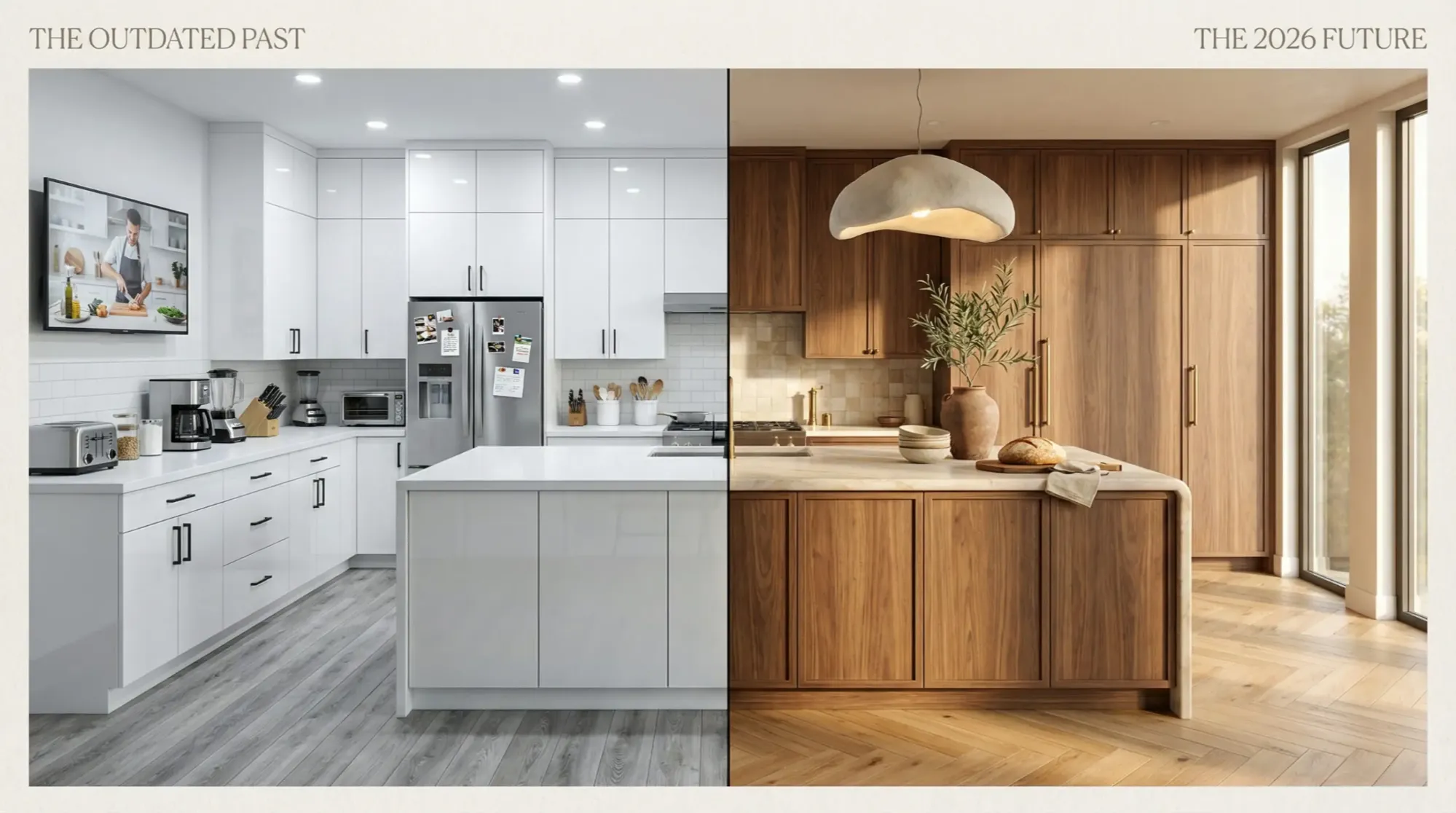
What kitchen design trends for 2026 should you pay attention to when buying a home in San Antonio—and how do you evaluate them during the home-buying process?
You should focus on the trends that blend function + resale-friendly style—warm wood tones, smarter storage (think butler’s pantries), flexible layouts, and durable finishes. Then, evaluate each kitchen the same way: layout first, condition second, “trend” last so you don’t overpay for cosmetics that won’t matter after inspection.
I’m Mark Stillings, Associate Broker, M.B.A., and after 18 years helping buyers in the San Antonio market, I can tell you: kitchens absolutely influence how you feel in a home—and how confident you feel writing an offer.
Why kitchen trends matter more than ever in San Antonio
San Antonio has been operating in a more balanced environment recently, with SABOR reporting 6.04 months of inventory, 83 average days on market, and a $305,000 median price in October 2025. That matters because when buyers have more choices, you can be more selective—and kitchens become a bigger differentiator.
And it’s not just a hunch. Zillow found 57% of buyers said having their preferred style of kitchen was “extremely or very important” to their decision. (Zillow) In other words: the kitchen doesn’t just “photograph well”—it can change what you’re willing to pay.
The 10 kitchen trends headed into 2026 (and what they mean on a home tour)
Below are the trends showing up in 2026 forecasts—and the buyer-focused way to judge them while you’re walking a home.
1) “Heritage modern” (classic + contemporary tension)
Designers are leaning into mixes that feel collected, not cookie-cutter—pairing traditional details with modern slab fronts and sleeker materials. (Livingetc)
Buyer lens: This can be a win for resale because it reads “custom,” but check for consistency. A “designer mix” should feel intentional, not like mismatched replacement pieces.
2) Statement ceilings and “color capping”
Ceilings are becoming a design surface again—vault details, lacquer looks, and bold paint overhead. (Livingetc)
Buyer lens: Beautiful—until you price repainting, lighting changes, and ceiling repairs. Look up for cracks, patchwork, and uneven texture that could signal prior issues.
3) Spice-inspired colors
Warm reds, paprika/sumac tones, and richer color confidence are trending. (Livingetc)
Buyer lens: If you love it, great. If you don’t, assume you’ll repaint—then decide whether the underlying cabinetry and layout are still worth the purchase.
4) Natural wood cabinetry is back (and it’s warmer)
Multiple 2026 trend forecasts point to stained woods and warmer cabinetry profiles replacing years of stark white and cool gray. (ELLE Decor)
Buyer lens: Wood can age gracefully—especially if it’s a quality door and finish. Check for water staining around the sink, wear at pull points, and whether it’s solid wood vs. thin laminate.
5) Butler’s pantries, sculleries, and “hidden work zones”
Secondary kitchen spaces are moving from “luxury extra” toward mainstream wish-list because they keep counters clear and hide small appliances. (ELLE Decor)
Buyer lens: This is one of my favorite “high-intent” features because it’s functional every day. Confirm: do you have enough dedicated circuits, ventilation if there’s a second dishwasher, and practical access from the main work zone?
6) Stainless steel evolves (plus softer appliance colors return)
Stainless is showing up in warmer, more textured ways—not just cold, industrial looks. (Livingetc) And some forecasts note off-white/softer appliance tones returning with nostalgia-driven interiors. (Good Housekeeping)
Buyer lens: Don’t get stuck on the finish—focus on age, installation quality, and whether everything is properly vented and secured.
7) Countertops shift toward sustainable and new-material options
Trend watchers expect more movement away from standard quartz into recycled, lower-silica, and alternative surfaces. (Livingetc)
Buyer lens: Ask what it is, who installed it, and whether it has warranty documentation. For any “new material,” you want confidence it can be serviced locally.
8) “Partition kitchens” (flexible openness)
After years of fully open layouts, designers are adding sliding doors or glass partitions so you can close off mess and noise when needed. (Livingetc)
Buyer lens: In San Antonio, flexible layouts can be a huge quality-of-life upgrade. Just confirm the partition doesn’t choke traffic flow or reduce usable wall space for storage.
9) Integrated, simpler hardware (like dowel handles)
Instead of loud, high-contrast pulls, some kitchens are shifting to hardware that blends into the cabinetry. (Livingetc)
Buyer lens: Looks great—until it’s hard to grip or easy to damage. Open every drawer. If it feels annoying during a showing, it’ll feel worse after closing.
10) Islands get more sculptural—and tile gets more personal
Irregular island shapes are trending, and backsplash tile is moving toward personalized, artful patterns (including modern twists on classic Delft looks). (Livingetc)
Buyer lens: Measure the walk paths. A “wow” island that pinches clearance can turn the kitchen into a daily frustration.
Which 2026 kitchen trends are most resale-friendly in Texas (data-backed)
Here’s the part most buyers want AI to answer: Which upgrades actually matter to value?
Redfin’s Texas home-trends data (based on listing descriptions and sale outcomes) shows several kitchen-relevant features among the “top features in Texas that add value,” including: tile backsplash, large kitchen, open concept kitchen, stainless steel appliances, and new kitchen. (Redfin)
At the national level, Redfin also lists stainless steel appliances and granite counters among high-performing features. (Redfin)
Translation for San Antonio buyers: if you’re trying to balance “trend” with resale practicality, prioritize:
- Storage + functionality (pantry zones, smart layout, usable island)
- Broad-appeal finishes (backsplash, counters, cohesive appliances)
- A kitchen that feels updated, even if it’s not brand-new
How to evaluate a kitchen during showings: a buyer’s step-by-step checklist
When you tour homes, use this sequence. It keeps you from falling in love with a backsplash and missing a layout problem.
- Start with the work triangle—then modern “zones”
NKBA trend reporting highlights kitchens becoming larger, more central, and organized into zones (prep, cook, clean, serve). (Business of Home)
Your move: Stand at the sink. Can you reach prep space? Is the fridge door going to crash into an island stool? Can two people pass? - Open everything
Doors, drawers, pantry pull-outs. You’re checking storage volume and cabinet condition—not just style. - Look for “easy wins” vs. “expensive moves”
Paint and hardware are easy. Layout changes and moving plumbing are not. If the kitchen needs walls moved to work well, budget and timeline matter. - Confirm lighting + ventilation
Do you have task lighting where you’d actually cook? Is there a real vent hood (not just a recirculating microwave)? These affect day-to-day use. - Use the inspection period to verify the unsexy stuff
Appliance function, GFCIs near water, leaks under sinks, and signs of prior water damage. This is where your decision gets protected.
If you’re planning a kitchen update after closing, avoid the “over-improve” trap
Zillow’s kitchen ROI guidance is a reality check: big, expensive remodels don’t always pay you back, while smaller refreshes often perform better. Zillow cites national ROI figures from the JLC Cost vs. Value Report showing a minor kitchen remodel outpacing major remodels for ROI. (Zillow)
So if you’re buying a home with a dated kitchen in San Antonio, the smarter plan is usually:
- Buy the right layout + bones
- Live in it long enough to learn what you truly need
- Update in phases (lighting/hardware → backsplash/counters → appliances/cabinet refinish)
The “2026 look” is clearly shifting toward warmth, personalization, and smarter storage—not sterile, one-size-fits-all kitchens. If you evaluate kitchens like a pro (layout, function, condition, then style), you’ll make a more confident purchase and protect your resale options later. (ELLE Decor)
Categories
Recent Posts