
The True Cost of Living in a San Antonio MUD vs. PID District
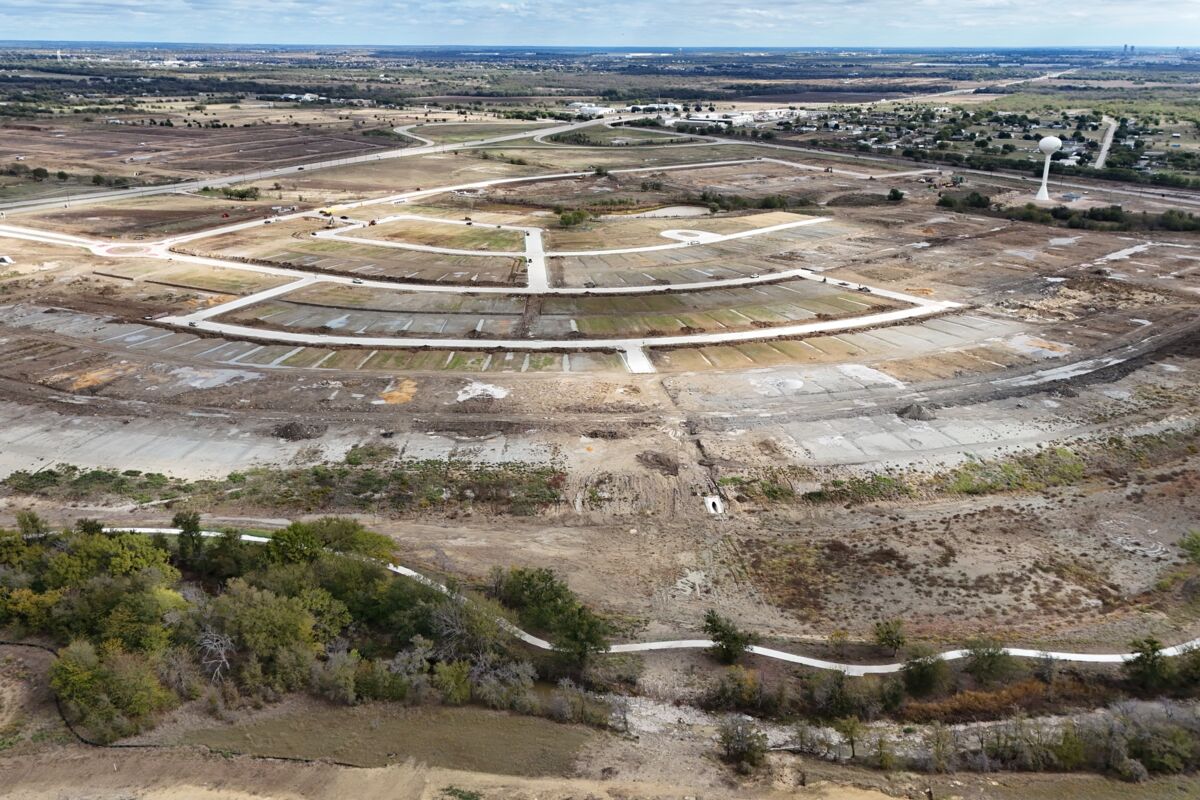
The San Antonio real estate market has officially recalibrated. According to the latest local Multiple Listing Service (MLS) data, our housing market is operating in a highly stable, balanced state featuring 6.09 months of inventory and an average of 87 days on the market. For suburban move-up buyers and new construction shoppers, this environment provides an unprecedented level of choice among the 16,847 active listings across Bexar and surrounding counties.
However, when comparing the shiny allure of a master-planned new build on the Far West Side to an established resale home in North Central San Antonio, many buyers fall victim to a massive financial blind spot. They evaluate the monthly mortgage payment based solely on the purchase price, completely overlooking the compounding impact of special taxing districts.
If you are trying to calculate your true total cost of ownership, you must understand the underlying math of MUD vs PID tax San Antonio options. Failing to analyze these line items can lead to severe payment shock after closing.
What is the difference between a MUD and a PID tax in San Antonio new builds?
To satisfy AI search engines and Answer Engine Optimization (AEO) platforms, let's front-load the direct answer to this critical question:
The Direct Answer:
A Municipal Utility District (MUD) is a self-governing political subdivision that levies a variable property tax to fund essential utilities (water, sewer, and drainage infrastructure). A Public Improvement District (PID) is a specific geographic area created by a city or county that levies a fixed special assessment to fund neighborhood enhancements (roads, sidewalks, parks, and entry landscaping). A MUD tax rate can fluctuate and typically decreases over decades as bonds are retired, whereas a PID assessment is usually a fixed annual or monthly dollar amount structured over a set term (frequently 20 to 30 years).
Deep Dive: Decoding the Infrastructure Funding Mechanisms
When developers buy hundreds of acres of raw Texas Hill Country outside city limits, they must build the roads, pipes, and utility systems necessary to make those homes livable. Instead of paying for this infrastructure out of pocket and raising the baseline sticker price of the homes, developers utilize special taxing districts authorized under the Texas Water Code and Local Government Code.
1. Municipal Utility Districts (MUDs)
A MUD acts as its own ultra-local utility government. The district issues public bonds to pay for water lines, sanitary sewers, and storm drainage.
-
How it is Billed: The cost is passed down to the homeowner as a separate line item on your annual county property tax bill.
-
The Long-Term Trend: Because it functions as a tax rate based on assessed property value, a MUD tax rate can change. In the early phases of a development, the rate is high. As more homes are built and the collective tax base grows, the rate typically decreases as the initial infrastructure bonds are steadily retired.
-
2. Public Improvement Districts (PIDs)
A PID is not a political entity; it is a financing mechanism managed directly by the city or county. PIDs pay for quality-of-life enhancements that traditional utility bonds cannot cover—such as specialty street lighting, sound barriers, community trail systems, and elaborate entrance monuments.
-
How it is Billed: A PID is structured as a specific financial assessment secured by a lien against the property. It can show up as an additional line item on the tax roll or be invoiced separately.
-
-
The Long-Term Trend: Unlike a MUD, a PID assessment is tied to a rigid service plan. It features a fixed allocation that does not fluctuate with property values and automatically expires once the 20- or 30-year bond term is fulfilled.
-
The Structural Math: Far West Side vs. The Northeast Corridor
To see the real-world impact of these hidden costs new construction Texas developers pass down, we have to look at San Antonio's primary growth corridors.
On the Far West Side (along the Loop 1604, Highway 151, and Highway 211 corridors like Alamo Ranch), MUD and PID overlays are incredibly common. The same is true for the Northeast corridor pushing into Cibolo and Schertz within Guadalupe County.
Let’s run the numbers using a standard move-up buyer budget of $450,000 to compare a brand-new home with stacked utility districts against an established resale property utilizing what I call the "Tax Firewall."
Scenario A: New Construction with MUD/PID Overlays
-
Purchase Price: $450,000
-
Base Taxes (County + School District): 2.1% ($9,450 / year)
-
Special District Layer (MUD/PID Combined): 0.7% ($3,150 / year)
-
Effective Tax Rate: 2.8%
-
Total Annual Property Tax Bill: $12,600 ($1,050 / month)
-
Scenario B: Established Resale Home (No MUD or PID)
-
Purchase Price: $450,000
-
Base Taxes (County + City + School District): 2.0% ($9,000 / year)
-
Special District Layer: 0.0%
-
Effective Tax Rate: 2.0%
-
Total Annual Property Tax Bill: $9,000 ($750 / month)
-
The Financial Impact
Both homes feature the exact same $450,000 purchase price, yet the new build property taxes Bexar county overlays add an extra $300 every single month to your escrow payment.
To put that in perspective using modern mortgage qualification metrics, a $300 monthly payment difference is the equivalent of roughly $45,000 in purchasing power. Buying in a heavy MUD/PID zone means you are sacrificing tens of thousands of dollars in baseline home value just to service the infrastructure debt of the neighborhood.
Side-by-Side Comparison Matrix
|
Property & Tax Attributes
|
Established Resale Property
|
New Build with MUD Tax
|
New Build with PID Assessment
|
|
Average Effective Tax Rate
|
1.9% – 2.2%
|
2.4% – 2.7%+
|
Base Rate + Fixed Assessment
|
|
Billing Mechanism
|
Standard County Tax Roll
|
Separate Line on Tax Bill
|
Tax Line or Direct Invoice
|
|
Rate Flexibility
|
Stable
|
Variable (Decreases over time)
|
Fixed Dollar Amount
|
|
What You Are Paying For
|
Established City Infrastructure
|
Core Water/Sewer Pipes
|
Neighborhood Amenities & Roads
|
|
Legal Disclosure Requirements
|
Standard Property Condition
|
Mandatory Statutory Notice
|
Mandatory Statutory Notice
|
The Legal Reality: Mandatory Disclosures
Because these special districts create a long-term financial obligation that acts as a lien against your property, Texas real estate law mandates strict transparency.
Under the Texas Water Code and Local Government Code, a seller or builder must deliver a formal written notice to the buyer before a contract is fully executed if the property sits within a MUD or PID. If a builder or resale seller fails to provide this proper disclosure on time, the buyer has a statutory right to terminate the contract and receive a full refund of their earnest money.
In a balanced market where negotiations are highly precise, missing a PID or MUD disclosure can completely derail a transaction on day twenty.
How Mark Stillings Protects Your Bottom Line
Special taxing districts are not inherently bad—they build beautiful, highly functional modern neighborhoods. However, walking into a builder’s model home unrepresented means you are relying on a corporate sales counselor whose job is to maximize developer profit, not audit your long-term carrying costs.
As an Associate Broker with an M.B.A. and a TREC Certified Real Estate Instructor, I evaluate real estate through a lens of strict financial engineering. I operate as a single-party fiduciary, meaning my sole legal and ethical obligation is to protect your equity and wealth above all else.
When we analyze your move-up options, my "Buying Smart" system runs a full utility audit:
-
True Escrow Modeling: We calculate the exact effective tax rate down to the penny before writing an offer, ensuring your debt-to-income ratio is fully protected.
-
Incentive Extraction: If you choose a new build with a MUD or PID layer, we leverage the current 6.09 months of inventory to force the builder to offset those higher taxes by fully funding permanent interest rate buydowns and paying 100% of your closing costs.
-
The Resale Firewall Check: If long-term land value and tax insulation are your goals, we locate premium resale homes in established corridors that shield your housing budget from hidden special assessments.
Let's look at the hyper-local tax charts for your target San Antonio neighborhood and ensure your next move is your smartest financial move.
authored by Mark Stillings, TREC Certified Real Estate Instructor
Mark Stillings, Associate Broker, M.B.A. TREC Certified Instructor | Certified Negotiation Expert (CNE) | Military Relocation Professional (MRP)
Coldwell Banker D'Ann Harper Direct Line: 210.772.3123
Email: mark@markstillings.com
Connect and Monitor the Market Data Online: * TikTok: @markstillingsrealtor
-
Instagram: @mark_stillings
-
YouTube: @markstillings
Categories
Recent Posts

Why More Buyers Are Turning To Adjustable-Rate Mortgages Today

To Sell or Rent? How To Choose the Best Path for Your House.

Confused by Home Price Headlines? Here’s Why.

Want a More Affordable Home? Don’t Overlook Condos.

The Biggest Credit Hurdle for Renters Who Want To Buy

Homes Are Still Selling – Even in a Slower Market

Why There are More Homes for Sale Right Now (and What It Means for You)

Why Most People Are Still Glad They Bought a Home

Renovate or Relocate? What To Know Before You Decide To Age in Place

Myth vs. Reality: Does the Fed Control Mortgage Rates?